This is general education, not medical advice. Whether LLLT is suitable for you depends on your situation — Hayley will talk that through honestly before any treatment.
The simple version
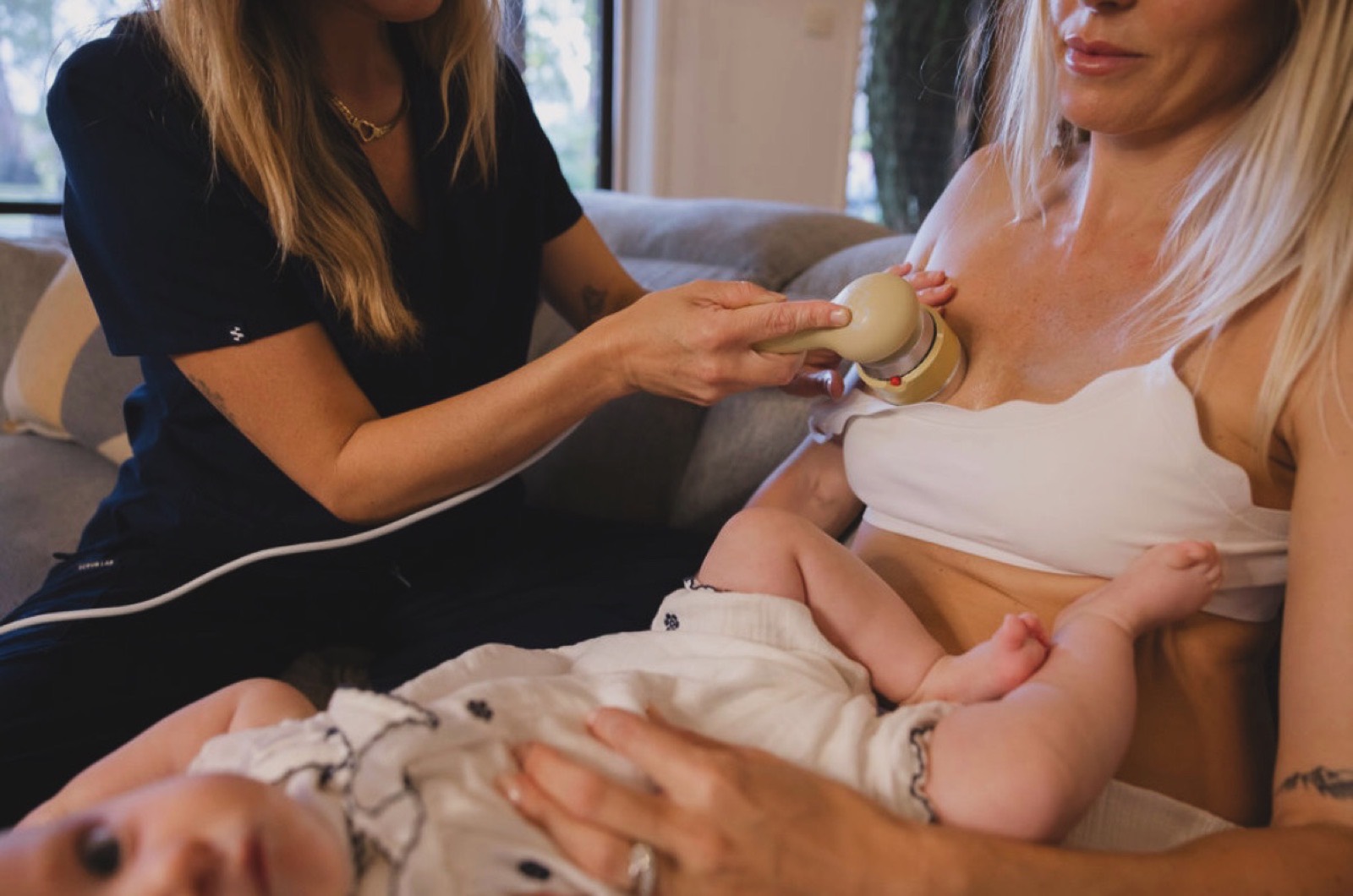
Low-Level Laser Therapy uses low-intensity light — usually red or near-infrared — applied to the skin over an area of concern. Unlike a surgical laser, it doesn't cut or heat the tissue. It's painless, and most people feel little more than the applicator resting on the skin. The idea is that certain wavelengths of light are absorbed by cells and may support the body's own repair and anti-inflammatory processes. You may also hear it called cold laser or photobiomodulation (PBM) — same idea, different names.
How it's thought to work
The most discussed mechanism is that light is absorbed within the mitochondria — the parts of a cell that produce energy — which may influence local circulation, inflammation and tissue repair signalling. In practical terms, practitioners use LLLT hoping to:
- Support a calmer inflammatory response in the treated area
- Encourage local circulation and lymphatic movement
- Support the tissue's natural repair processes
It's important to be straight about this: research into LLLT is active and ongoing, results vary between people and conditions, and it isn't a guaranteed fix for anything. It's best thought of as one supportive tool, often used alongside other care — not a replacement for it.
What it feels like
A session is quiet and undramatic. The device is placed against or just above the skin for a short time — often around 8–15 minutes for a focused area. There's no heat to speak of, no needles and no downtime. Most people can carry on with their day straight afterwards.
What Halotherapy uses it for
As a registered-nurse-led service on the Gold Coast, Hayley uses LLLT (and, where useful, therapeutic ultrasound) as part of gentle, supportive care for:
Is it safe?
LLLT is generally considered low-risk and non-invasive. That said, it isn't right for every situation — for example, treatment is usually avoided directly over an active cancer, and there are other cautions a clinician will check. This is exactly why an assessment comes first: Hayley will ask about your health history and tell you honestly if LLLT isn't appropriate, or if you'd be better served by seeing your GP or another professional.
The honest bottom line
LLLT is a gentle, painless, non-invasive therapy that may support your body's own recovery processes. It isn't magic, it isn't a cure, and it works best as part of sensible overall care. If that sounds like a fit, the best next step is a proper assessment. If you found this page while dealing with a blocked duct or mastitis, there's more on how a session works on mastitis treatment on the Gold Coast.
Meet Hayley, browse pricing, or book a visit to talk it through.